⏩ FP! Week In Review #37
Also: Key Up Wing and Down Wing news from the week that was


To my wonderful free subscribers: I’m so glad you’re here. I love sharing my vision for a better tomorrow with you.
If you find Faster, Please! of high quality and value, please consider supporting my work by upgrading to a paid subscription. Just hit the Big Blue Button™️ below to check out our deeply discounted options. I would really appreciate it!
In Case You Missed It ...
✨ The long-term impact of L’affaire Anthropic (Monday, 731 words)
🎆 A serious paper about the path to superintelligence (Wednesday, 1146)
🚘 Why Waymo is stuck in Big Apple traffic (Friday, 933 words)
⤴️⤵️ Up Wing/Down Wing
A selection of pro-progress and anti-progress news items from the past week.
⤴ Up Wing Things
AI, Computing & Robotics
States Are Betting That AI Can Solve the Prison Recidivism Crisis - WSJ
AI Set to be Largest CapEx Cycle Ever ... and Soon Majority Externally Financed - Paul Kedrosky Substack
How Europe must respond to America’s AI warning shot - The Economist
Opinion | Dear A.I. Companies: The Doom Trolling Needs to Stop - NYT
Inside the start-up aiming for a giant leap in robot intelligence - New Scientist
Here’s what Jeff Bezos’ new startup Prometheus will do - Ars Technica
Space Economy
Space data centers, a settlement on Mars: The far-off ideas driving SpaceX’s $2.4T valuation - WashPost
Elon Musk Is Unleashing SpaceX’s New War Chest to Solve His AI Problem - WSJ
SpaceX is now a public company valued for its AI potential, so what comes next? - Ars Technica
Energy
Trump’s ‘nuclear bros’ race to deliver US atomic revival - FT
Centrus, Oklo HALEU agreement to support reactor deployment - World Nuclear
Rolls-Royce wins contract to build small nuclear reactors for Sweden - FT
Fusion industry suppliers bet on race for reactors creating a $73bn market - FT
Europeans should learn to love the air-conditioner - Economist
Trump admin abandons fight against wind energy as clean energy output surges - Ars Technica
Opinion | The Tiny Solar Panel That Could Change America - NYT
Health
FDA advisors unanimously vote to approve Moderna’s mRNA after agency drama - Ars Technica
“Truly evil” FDA rejection of gene therapy overturned after Trump official ousted - Ars Technica
Two years, 2 million words: How a brain implant transformed an ALS patient’s life - The Washington Post
General-purpose large language models outperform specialized clinical AI tools on medical benchmarks - Marginal Rev
Miscellaneous (But Interesting)
The Great American Housing Shortage Is Finally Forcing a Search for Solutions - WSJ
The Pentagon Just Released Its Third Batch of UAP Files—What Have We Learned from the PURSUE Releases So Far? - The Debrief
Great Americans: The Tireless Innovation of Edwin Land - The Free Press
⤵ Down Wing Things
AI Regulation
Trump is taking a page out of China’s sovereign AI playbook - FT
Anthropic’s Mythos and Fable Fiasco Is a Five-Alarm Fire for AI Users - Bloomberg
Trump promised to bring order to AI oversight. That lasted 2 weeks. - Politico
Donald Trump has cut off access to the world’s best AI model - The Economist
AI Risk
The surprisingly simple ways AI can be tricked into breaking its own rules - The Washington Post
An explosion of AI deepfakes is redefining American elections - Axios
AI Supercharges Deepfake Nudes—Unleashing a New Form of Bullying Among Kids - WSJ
In Age of AI, World’s Leading Deepfake Expert No Longer Trusts His Own Eyes - NYT
AI Business & Economics
‘We created a monster’: companies rein in AI usage as costs strain budgets - FT
A year after Meta tapped Alexandr Wang to build a new AI model, Zuckerberg has to sell it - CNBC
People around the world see a winner on AI — and it’s not the US - Politico
Physical Tech
The US says ASML’s top chip tool may be in China. ASML says it isn’t - Tech Crunch
Why Waymo’s Driverless Taxis Won’t Be on Your Streets Anytime Soon - NYT
Why Robots Still Can’t Do Science - Nautilus
Energy & Data Centers
Trump’s War on Gigawatts - Heatmap
The Cloud Has Sound: The Unrelenting and Unseen Cost of the A.I. Boom - NYT
Why China is betting on big nuclear reactors - MIT Technology Review
Health & Society
Colorado’s Funeral Mistake - Marginal Rev
War Hangs Over American Farmers as Fertilizer Prices Rise - NYT
Growing Ebola Outbreak Is a Warning - Bloomberg
Key mission for Europe’s commercial space enterprise scrubbed again - Ars Technica
↕️ Which Wing Things?
AI Geopolitics
Anthropic Has Nvidia Template for Fixing Mythos-Fable Nightmare - Bloomberg
Anthropic is battling Uncle Sam for control of superpowered AI - Economist
Anthropic boss tells G7 leaders to ‘resist the temptation to splinter’ over AI - FT
Trump’s AI export strategy runs into Trump’s export controls - Axios
The Hacker Sent by Anthropic to Calm the Government’s Nerves About AI Safety - WSJ
Anthropic’s Retreat Is a Win for China’s ‘Open AI’ - Bloomberg
US and Europe discuss access to AI models after Anthropic dispute - FT
Are Government Stakes the Key to AI Sovereignty? - Project Syndicate
The Strategic Logic of the AI Arms Race - Project Syndicate
Summary - Europe 2031
Superintelligence Preparation
Inside the Room Where America’s Brightest Game Out How to Avoid an AI Apocalypse - WSJ
How Long Until AI Doesn’t Need Humans? - Asterisk
Humanity isn’t ready for the coming intelligence explosion - The Economist
AI Economics
‘Pretty Crazy’ Token Usage Is Testing Bosses’ Bet on AI - WIRED
Tech Workers Maxed Out Their A.I. Use. Now They’re Trying to Minimize It - NYT
Companies are scrambling to curtail soaring AI costs - The Economist
OpenAI spending hit $34bn last year ahead of planned IPO - FT
AI is turning Nintendo and Sony products into accidental luxury goods - FT
SpaceX and OpenAI Are Ending Wall Street’s Era of Stock Scarcity - Bloomberg
Coders Were Tech’s MVPs. Now They’re Fighting to Stay in the Game. - WSJ
Work From Home Is Here to Stay—Even if Some CEOs Don’t Love It - WSJ
Switzerland’s Radical Proposal on Immigration: Cap the Population - WSJ
Space Economy
SpaceX’s plan: Put all the data centers in space, then profit - WashPost
Elon Musk’s Next Move May Be a Mega-Merger of SpaceX and Tesla - NYT
SpaceX-Tesla Inc. Is Inching Closer. Watch Out, Nvidia? - Bloomberg
5 Thoughts About the SpaceX IPO - Heatmap News
Why Musk Raced to Take SpaceX Public in the World’s Biggest IPO - Bloomberg
Chips, Energy & the Physical Buildout
Google Is Using Nvidia’s Playbook to Build a Rival AI Chip Business - WSJ
The Secret Revolution in Battery Technology: 3-D Printing - WSJ
Amazon Retaliated Against Workers Who Supported Regulating Data Centers, Complaint Says - NYT
Freedom (It Won’t Slow You Down) - Heatmap
The power decisions that could shape the next century - Axios
Essays and Q&As, Briefly
✨ The long-term impact of L’affaire Anthropic
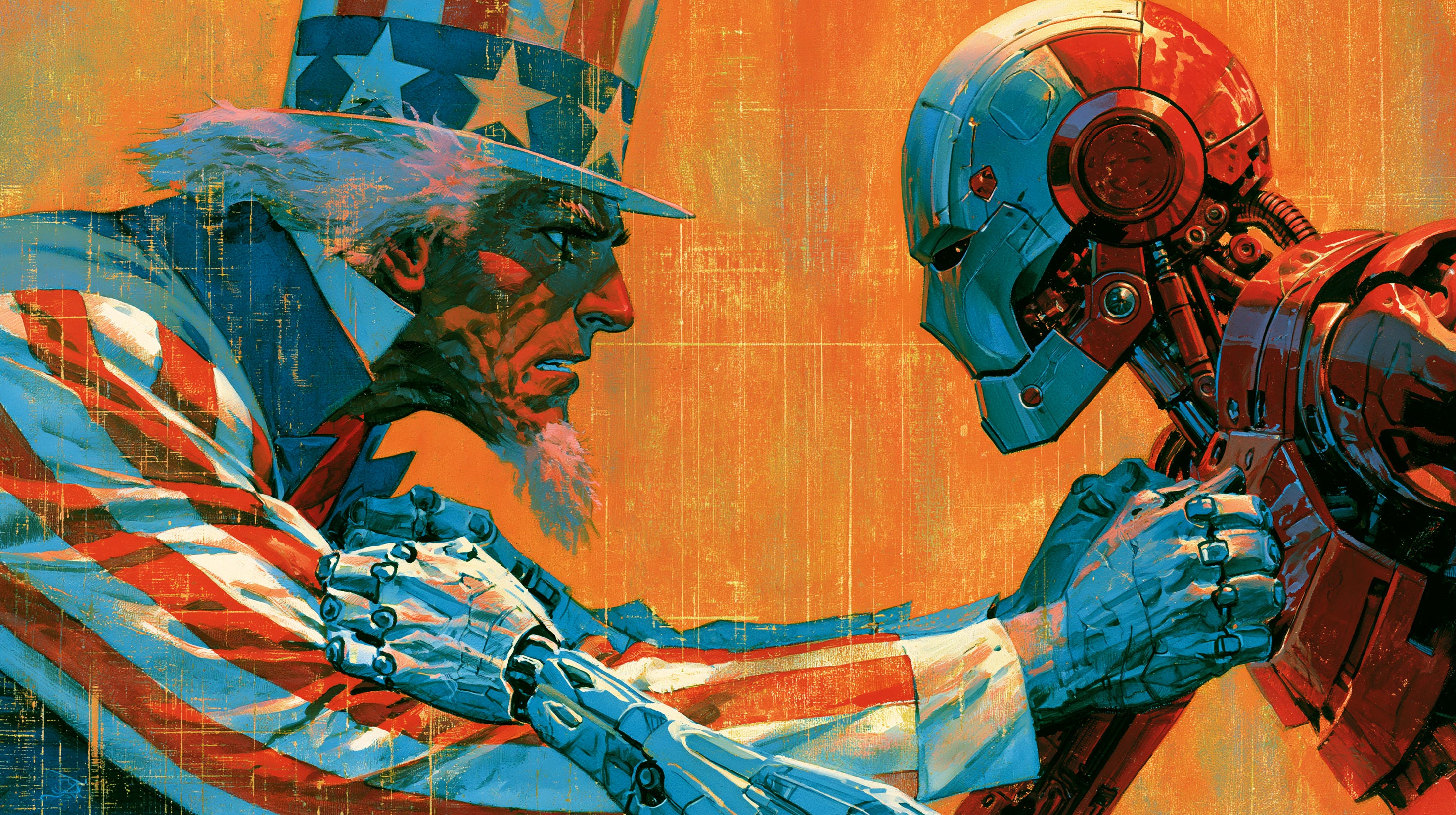
Why it matters: True revolutions are tumultuous affairs, and the AI Revolution is no different. The Trump administration’s export controls on Anthropic’s Fable and Mythos models—and Anthropic’s own suspension of those systems—may be resolved by the time you read this, but the episode marks an important turning point in how business and government interact.
The bet that’s souring: Market-loving champions of light-touch AI regulation have spent three years betting Washington would mostly agree with them. Do no harm! That wager now looks shaky.
Anthropic pulled the systems within ninety minutes of being contacted, per Politico—a Thanos-esque snap.
The move capped a run of interventions: a directive barring federal agencies from using Anthropic models, a “supply chain risk” designation, an executive order seeking pre-launch access to new models, and Trump floating direct equity stakes in AI developers.
The pushback: Tech policy analysts argue the ban hits defenders harder than attackers and pushes customers toward kill-switch-free Chinese models — with zero explanation and a 90-minute compliance window. Actions have (unintended) consequences.
Where this leaves us: The restraint impulse that light-touch advocates counted on is expiring. A de facto or even de jure“FDA for AI” prerelease, licensing regime for frontier models no longer seems far-fetched.
🎆 A serious paper about the path to superintelligence

Why it matters: Predictions are difficult, especially about the future—which is exactly the spirit behind Google DeepMind’s new paper “From AGI to ASI.” Fourteen authors, including cofounder Shane Legg, map out where AI goes after human-level intelligence. How could this not matter?
I mean, maybe: The researchers are careful not to promise an omnipotent intelligence — aging, nanobots, brain uploading, and Dyson spheres all stay firmly in the "not guaranteed" column. But DeepMind CEO Demis Hassabis sounds a lot more sci-fi in his recent biography: Think Iain Banks’s Culture series, mining asteroids, solved fusion.
Hassabis pegs AGI at “maybe 2030, plus or minus a year”—pending one or two more big breakthroughs in continual learning, memory, and reasoning.
The paper lays out four routes from AGI to ASI: soaring “effective compute,” armies of coordinated AI models, a self-reinforcing improvement flywheel, and a genuine architectural breakthrough.
Tap the brakes: None of this is guaranteed. Compute could hit real-world walls— chips, electricity, money. The flywheel could stall. And the most plausible friction may not be technical at all: a spooked, Down Wing public nudging governments to slow things down.
Faster, please: “We can only see a short distance ahead, but we can see plenty there that needs to be done.”
🚘 Why Waymo is stuck in Big Apple traffic

Success story: Waymo is doing roughly a half million paid rides a week, and its next-gen Ojai robotaxi is expected to cut vehicle costs by about half. The remaining headaches—edge cases, remote assistance, rain, construction zones—increasingly look like the operational pains of scaling, not proof the technology doesn’t work. Let’s go!
The intrigue: Waymo’s national expansion is being slowed by a classic collective-action problem. Driverless cars offer massive, dispersed benefits to millions of future passengers, but impose immediate, concentrated losses on a highly organized group: taxi and truck drivers. The NY example:
Waymo offered New York $20 million for displaced drivers. The governor briefly backed legalization in January, then dropped it a month later under union pressure.
Mayor Mamdani has signaled he’ll side with the taxi drivers.
JPMorgan: “Regulation remains the binding constraint outside select U.S. states and China.”
Keep in mind: Waymo is far safer than human drivers on serious-injury crashes, but a single viral incident can outweigh the data. Opponents exploit two mental quirks, salience bias and status quo bias, to their gain.
Looking ahead: These same dynamics—concentrated losses, regulatory bottlenecks, exploitable fears—will shape how AI diffuses across the broader economy, not just robotaxis.
*Links and essay summaries formatted by AI, written by me.
On sale everywhere: The Conservative Futurist: How To Create the Sci-Fi World We Were Promised