
🪖💡 War is bad for ideas
Why conflict destroys more progress than it creates

My fellow pro-growth/progress/abundance Up Wingers in the USA and around the world:
Artificial intelligence may soon have its military moment, too—perhaps sooner rather than later—but drones have become the iconic weapon of the 2020s. In Ukraine, cheap, mass-produced drones have forced militaries to rethink how vulnerable even modern armored forces really are. Across the Middle East, precision-strike capabilities—once the preserve of great powers with their advanced economies—have become more widespread and cheaper.
When people see wars driving such leaps, they naturally reach for a familiar conclusion: Conflict is a crucible of progress. Necessity, mother of invention, and all that. As the American president says Armageddon, the 1998 apocalyptic asteroid film:
For the first time in the history of the planet, a species has the technology to prevent its own extinction. All of you praying with us need to know that everything that can be done to prevent this disaster is being called into service. The human thirst for excellence, knowledge, every step up the ladder of science, every adventurous reach into space, all of our combined modern technologies and imaginations, even the wars that we’ve fought have provided us the tools to wage this terrible battle.
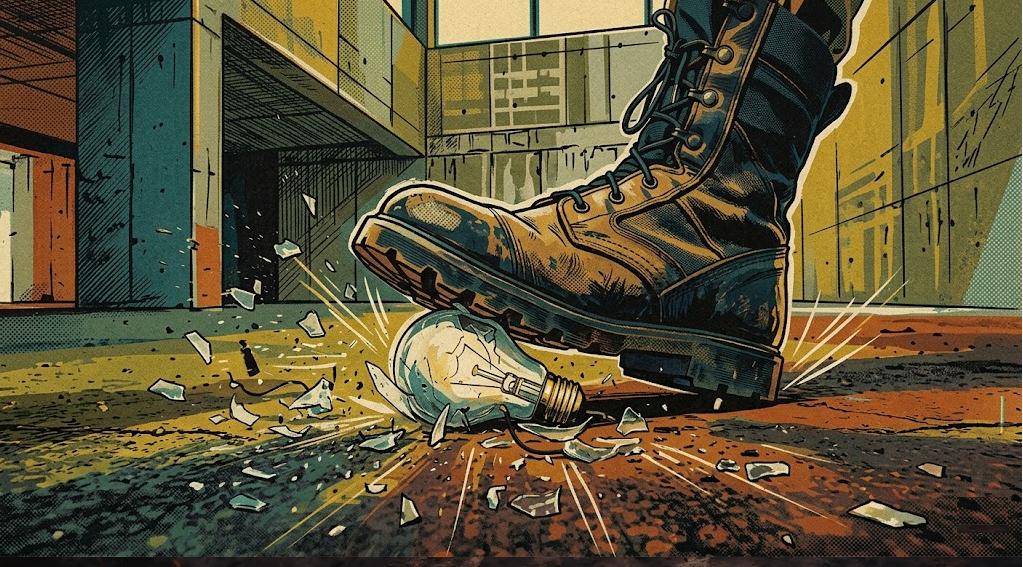
Here’s your trouble: Wars focus a country’s scientific and engineering talent on specific military problems, sometimes solving them with impressive speed, as with the atomic bomb in World War II. (Or destroying a cinematic asteroid with mere moments to spare!) But such advances get mistaken for accelerating progress more broadly. For every drone innovation, there’s an opportunity cost: technologists diverted from work with more direct economic value. And as the scale of conflict grows, so does the damage—especially to the people and knowledge networks that make discovery possible. The evidence on this point is clear.
