
🚀 'For All Mankind,' for real
NASA's new moon base plan brings the space age we were promised a step closer to reality

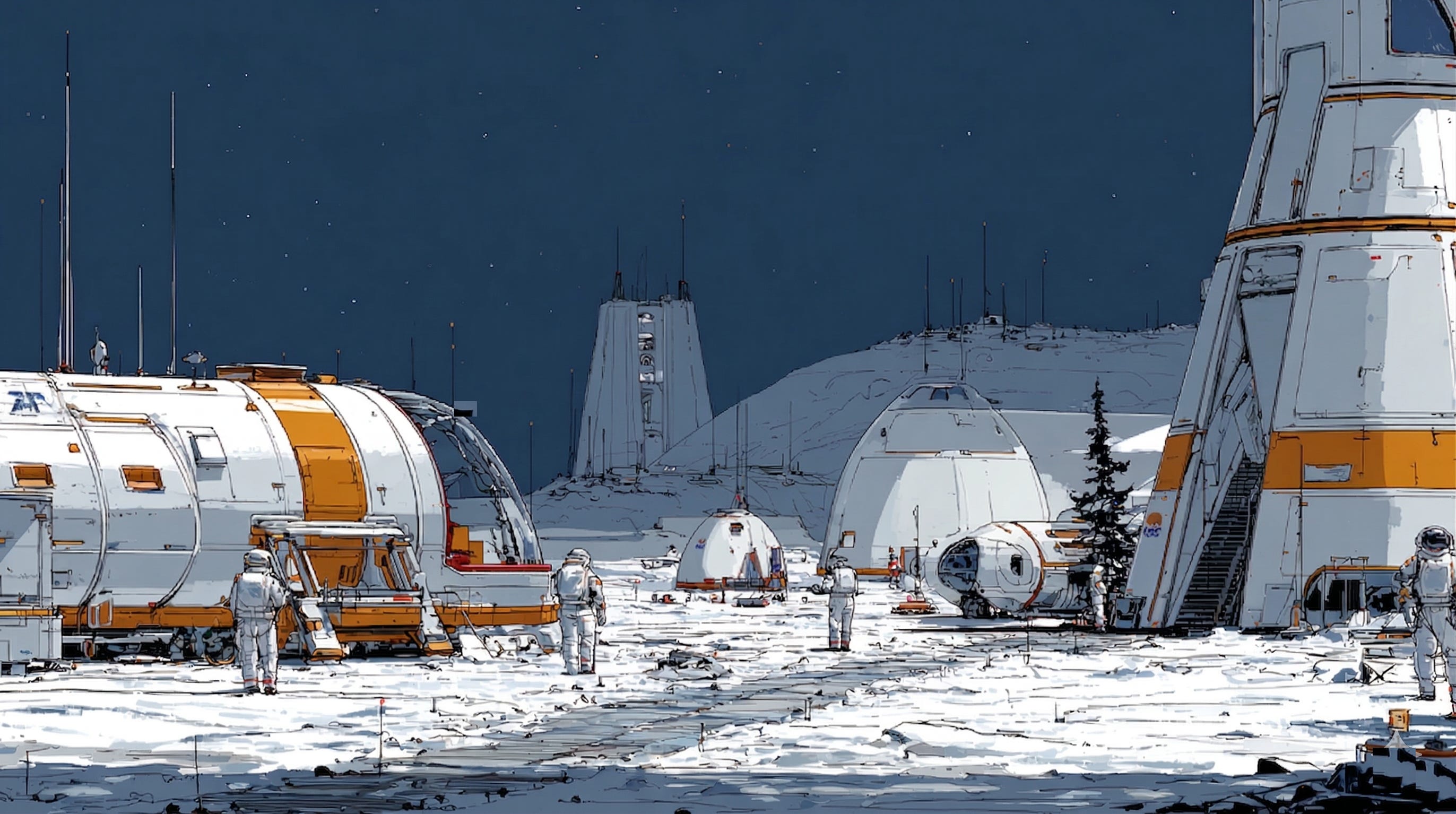
My fellow pro-growth/progress/abundance Up Wingers in the USA and around the world:
Today is our long-awaited Opening Day—not for Major League Baseball, but for the Apple TV premiere of For All Mankind. (The first episode is now available.) It’s the fifth season in the alternate-history drama in which the 1960s US–Soviet space race never ended. In that imagined timeline, America and the world experience a far faster pace of technological progress—at least in the realm of atoms—than in our own. By 2012, the year in which this installment is set, a Mars colony is mining an asteroid trapped in orbit around the Red Planet while constructing a space elevator to improve access to the resource. What’s not to love about that? Nothing, my friends, absolutely nothing.
As Ronald D. Moore, the show’s creator (and of the 2000s Battlestar Galactica) told me in a 2020 interview:
The show I wanted to do was the space program that we didn’t get. The one that I was promised growing up as a kid, where we did all those things, the Apollo kept going, the space race continued, and we went out into space and beyond more aggressively and with greater ambition.

The Moon our destination, again
But maybe it’s not too late to make those early Space Age dreams, where humanity spreads out across the Solar System, a 21st-century reality. Am I a hundred percent sure we can do it? No, but I’m a bit more sure today than I was when this week started.
