
🚀🌑 China will probably beat America back to the Moon. Then what?
Building a spacefaring civilization is about more than planting a flag, but this loss would hurt

My fellow pro-growth/progress/abundance Up Wingers,
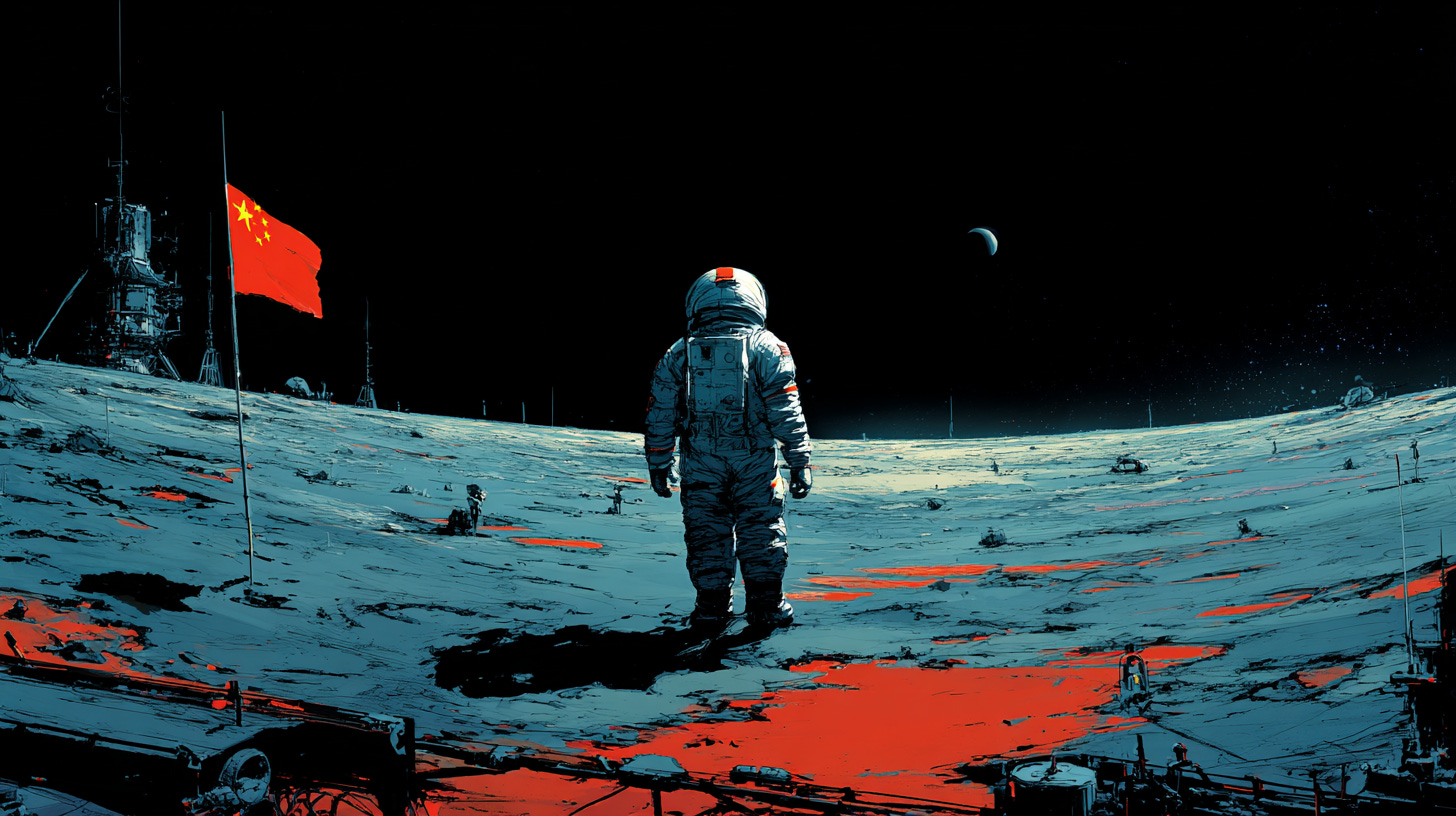
China’s space program is quietly but steadily ticking off the boxes needed for a crewed lunar landing before 2030 — and before the United States. As ace space journalist Eric Berger of Ars Technica reports, recent tests of the Lanyue lunar lander, the Long March 10 rocket, and the Mengzhou crew spacecraft demonstrate methodical progress across all three pillars of a lunar landing program.
Meanwhile, here at home, according to Berger:
With its lunar landers, NASA seeks to develop in-space propellant storage and refueling technology, allowing for lower cost, reusable lunar missions with the capability to bring much more mass to the Moon and back. This should eventually allow for the development of a lunar economy and enable a robust government-commercial enterprise.
But recent setbacks with SpaceX's Starship vehicle–one of two lunar landers under contract with NASA, alongside Blue Origin's Mark 2 lander—indicate that it will still be several years until these newer technologies are ready to go. So it's now probable that China will "beat" NASA back to the Moon this decade and win at least the initial heat of this new space race.
That progress stands in unfortunate contrast with NASA’s Artemis effort, dependent on vehicles still maturing, most notably SpaceX’s Starship and Blue Origin’s Mark 2 lander. If NASA astronauts return to the surface after Beijing’s taikonauts make their lunar debut, America will lose its decades-long monopoly on human Moon landings, one of the strongest symbols of both American technological dominance and the superiority of the liberal democratic, market capitalist Way of Life.
This from Ryan McEntush, a partner at venture-capital firm a16z: “China wants the Moon. Like the First Island Chain in the Pacific, it is the gateway to everything beyond. Lunar property rights are vague, defined only as “zones of no interference,” much like Antarctica. Once established, others cannot disrupt.”
The geopolitical shock would be profound. Dean Cheng, a longtime China-space analyst, warns in the Berger piece that a Chinese first step “means the end of American exceptionalism” and would be read globally as proof that “China can do ‘big’ things, and the United States cannot.”
As space watcher A. Pettit correctly argues on X:
The soft power projection would be immense. 1.59+ billion people are on TikTok alone. China will show its victory to the world and that pedestal will siphon nontrivial international support from the US.
If there is a “Chinese Century” I believe it truly begins with a successful crewed Moon landing. When China attains one of the last things that once made America exceptional. Few understand this.
For All Mankind on Apple TV+ vividly dramatizes such a stomach-churning moment against the backdrop of the 1960s Space Race. When cosmonaut Alexei Leonov becomes the first human on the Moon in the show’s alternate history, it gives the USSR a huge propaganda and political boost. The Soviets claim moral and ideological victory, touting the Soviet system as superior. (Leonov: “I take this step for my country, for my people, and for the Marxist-Leninist way of life, knowing that today is but one small step on a journey that will take us all to the stars.”)
Surely, communist China will do the same. So brace yourself.
As for Apollo 11, it suffers a near-disaster: Armstrong and Aldrin’s lunar module runs into technical trouble and makes a hard crash-landing on the Moon. The astronauts survive, but the spectacle strips away any sense of American triumph. Instead of planting the first flag, they limp home from what should have been the ultimate showcase of US superiority.
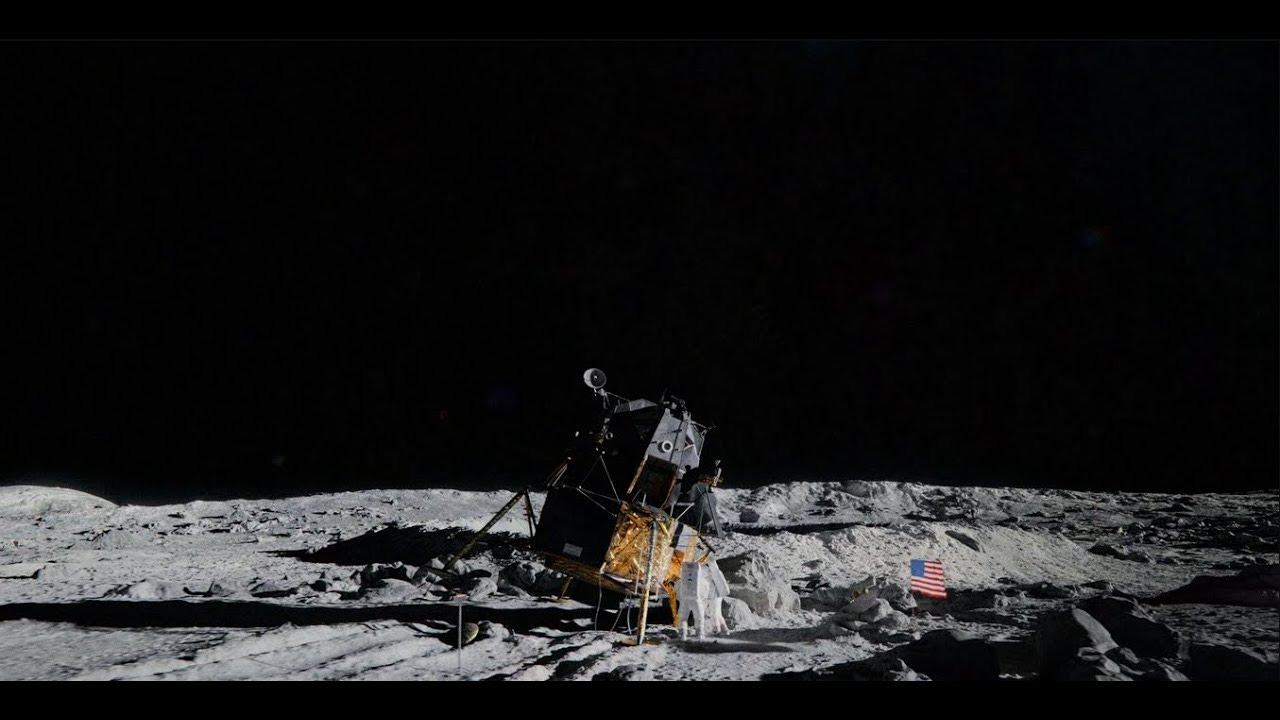
That bumpy, belated journey, juxtaposed with Leonov’s confident first steps, is what makes the blow so crushing in the show’s “what if” timeline. But the disappointment galvanizes Washington into pouring vastly more money into NASA — rapidly expanding the astronaut corps to include women, building a lunar base, and eventually pursuing Mars — creating the long alternate Cold War space race that drives the series. The key question is whether America responds with retreat or renewed vigor in this reality.
The good news is that NASA’s Artemis program, as Berger noted, is more ambitious than simply repeating Apollo. Its aim is to make lunar exploration sustainable (likely through private launchers like SpaceX and Blue Origin) and scalable: developing reusable landers rather than expendable ones, creating in-space refueling to extend mission range, and building infrastructure that could seed a long-term cislunar economy as a foundation for a Mars mission and beyond. In principle, this is the difference between planting a flag for national pride and founding a settlement as a first solid step toward becoming a true spacefaring civilization.
If that is the result, then this defeat will have a better long-term consequence than our 1969 Apollo victory. For all its glory, Apollo was followed by retrenchment: budget cuts, canceled missions, and the quiet end of human exploration beyond low-Earth orbit with Apollo 17 in 1972 (as I document in my 2023 book, The Conservative Futurist.)
A Chinese first landing might sting badly in the moment and the long-run impacts are hardly minimal, as McEntush notes above, but it could provide the very shock needed to prevent history from repeating. The risk here is humiliation. The opportunity is to finally turn space exploration and colonization into a lasting project rather than a brief burst of Cold War spectacle.
Sometimes being “first loser” isn’t the end of the world, even if it happens on a different world.

As Congress Does Less, The Courts Are Doing More
Breaking news: The Dispatch has acquired SCOTUSblog, the gold standard in Supreme Court analysis.
Reliable coverage of the Supreme Court has never been more important. With an unbridled executive branch and a Congress eager to surrender its constitutional prerogatives, the federal judiciary is playing an increasingly important role in shaping the country’s direction.
Join 600,000 loyal readers and check out The Dispatch today. No insulting clickbait, no false outrage, no annoying auto-play videos—just reliable journalism that helps you understand the big decisions that will shape our nation’s future.
Faster, Please! readers: Take 25% off a Dispatch membership today
Micro Reads
▶ Economics
▶ Business
AI Is Holding Up the Sky. The Rest Fell Back to Earth - Bberg Opinion
Nvidia’s Icy Reception in China Is Buying Time for Huawei - Bberg Opinion
▶ Policy/Politics
Elon Musk Wants to Give You Money for Nothing - WSJ Opinion
▶ AI/Digital
▶ Biotech/Health
▶ Clean Energy/Climate
▶ Space/Transportation
▶ Up Wing/Down Wing
NIMBYs Are Coming for the Data Centers AI Needs - Bberg Opinion
▶ Substacks/Newsletters
America’s fourth reinvention - Exponential View
We're Losing the Transmission Wars - The Ecomodernist
Voltaire on the Civility of Markets - Conversable Economist
Mercantilist AI Policy - Threading the Needle